

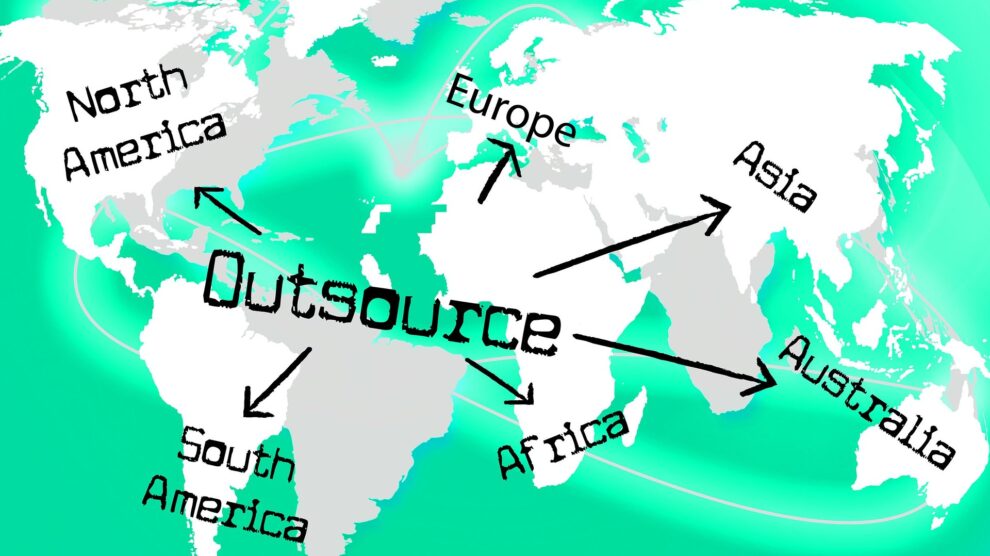

In my experience working with international teams over the years in marketing, leads often prioritize offshore teams’ technical skills to try to keep up with global demands. But the reality is that this is only the price of entry.
To build a truly collaborative team, I had to prioritize cultivating cultural intelligence. I had to learn to read subtle cues, like how silence affects communication in different cultures.
Paying attention to these nuances united our fragmented operations into a high-performing global workforce. The first step to mastering cross-cultural collaboration is understanding how team members share and perceive information.
Part 1: The Communication Spectrum: High-Context vs. Low-Context Cultures
In my years navigating remote teams, I’ve learned that the greatest distance between two people is context.
Most Western business cultures are low-context. That means communication in the workplace is literal, blunt, and explicit. A “yes” is a contract, and “I don’t know” is a standard data point.
However, much of the world’s talent pool comes from high-context cultures where communication is a social dance. In these environments, preserving harmony and saving face often outweighs blunt honesty.
The Agreement Trap
The most common point of failure in global outsourcing is the false affirmative. Here’s an example of how this works:
When a manager asks, “Can we get this done by Tuesday?” and the remote lead says, “We will try our best,” the manager hears a commitment. But in a high-context framework, that phrase often translates to: “It’s impossible, but I don’t want to disrespect you by saying no.”
This isn’t a lack of integrity. It’s a cultural priority to maintain a positive relationship. If you treat this “yes” as a literal guarantee, you’re setting up a collision.
Strategies for Radical Transparency
To move from a vendor-client relationship to a true partnership, you have to change the way you ask questions. You have to make it safe to be “difficult.”
- The Mirror Technique: Never end a briefing with “Does everyone understand?” Instead, ask the team to walk you through their interpretation of the logic. If they can’t mirror the strategy back to you, the “yes” was just a politeness.
- The “Blocker-First” Culture: In many cultures, admitting to a problem feels like admitting to failure. I’ve found success by explicitly asking for “the bad news first” in every stand-up. By rewarding the identification of risks rather than just the hitting of milestones, you normalize transparency.
- Depersonalizing Feedback: In high-context cultures, a critique of the work can feel like a critique of the person. I’ve learned to be extremely clinical with feedback, such as: “The data in this report is 10/10, but the formatting needs to be adjusted for the stakeholders.” Separating the person from the output allows for a more honest exchange.
By mastering this spectrum, you stop managing tasks and start managing intent. You move past the surface-level agreement and tap into the actual capacity of your global workforce.
Part 2: Rethinking Authority — Making it Safe to Speak Up
Having worked in organizations where collaboration is important, I see the most expensive silence is that of a junior team member who sees a disaster coming but feels culturally barred from speaking up.
In sociology, this is known as Power Distance: the degree to which people accept that authority is distributed unequally. In many global hubs, a manager is a figure of absolute authority. Challenging their plan is often seen as an insult.
The Cost of the Invisible Ceiling
I’ve seen this play out in SEO projects numerous times in my career: a senior stakeholder insisted on an outdated strategy, like aggressive keyword stuffing or a rigid site architecture. I knew it would trigger a long-term penalty.
In a high power-distance environment, the team will knowingly execute that flawed plan. Why? Because the hierarchy hurdle dictates that the boss’s direction is final.
You end up paying for expert talent, but you only receive order takers. Building a collaborative team involves the challenge of dismantling the idea that rank equals correctness.
Creating an Environment Where it’s “Safe to Fail”
Changing this dynamic means separating expertise from ego. If you want a team that catches errors before they reach the client, you have to make vulnerability a standard part of the job.
- Lead with your own mistakes: I make it a point to share my own errors during weekly syncs. When I admit I misread a data trend or botched a meta description, I’m giving the team “social permission” to admit their own bugs.
- The “Error-of-the-Week” Tradition: Instead of punishing mistakes, we should celebrate saves. Highlighting a caught error as a win for the company, rather than a failure of the person, slowly strips away the fear of authority.
- Anonymous Feedback Loops: Sometimes, the cultural weight of speaking up is too heavy for a face-to-face meeting. Using anonymous digital suggestion boxes allows the best ideas to surface based on merit, not on who has the most senior title.
Decision-Making: Fast Starts vs. Better Finishes
We often mistake a team’s process for their speed.
Many Western leaders favor top-down decisions: fast to start, but slow to pivot when things go wrong. Other cultures often favor consensual decision-making. This feels frustratingly slow at the start because everyone needs to be in agreement before the first line of content is written.
However, I’ve found that the “slow” teams often finish first. Because they spent the time aligning at the start, they don’t hit the preventable roadblocks that haunt top-down projects.
Building a global workforce is about creating a bridge where authority is respected, but truth is prioritized. When a junior writer feels safe enough to tell me my headline is weak, I know we’ve stopped being a vendor and started being a team.
Part 3: Escaping the “Us vs. Them” Trap
When you work remotely for a global company, it’s incredibly easy to feel like a glorified ticket-processor. You sit thousands of miles away, detached from the headquarters, waiting for the next brief to drop.
This psychological distance creates the “Us vs. Them” trap.
If you treat your offshore talent like a “shadow team” (just overflow capacity to handle the grunt work), you will only ever get minimum viable effort. To build a unified culture, leaders must bridge the gap between output and meaning.
Purpose Over Paychecks
Having also dabbled in the muddy waters of freelancing myself, I see this constantly: a client will send over a brief that is nothing but a list of keywords and a word count. It feels like assembly-line work.
But the modern global workforce operates differently. A paycheck is no longer enough to guarantee high-level performance. This is especially true with more Gen Zs populating the workforce. They need their professional goals to align with their personal values.
- The Assembly-Line Approach: “Write 5 posts about supply chains by Friday.” (Result: Low engagement, generic output).
- The Mission-Driven Approach: “We are trying to make global logistics more eco-friendly, and your writing is how we educate the market.”
When you share the why behind the work, your remote contractors stop being order-takers and become partners.
Making Space for Real Connection
Trust is built in the “white space” between tasks.
If the only time onshore leadership speaks to the remote team is to ask about deadlines, what makes your set-up different from simply running a factory?
Creating a single culture requires intentional, shared rituals:
- Make time for the human element: Take five minutes at the start of a call to ask about a local holiday.
- Celebrate beyond the spreadsheet: Acknowledge wins that aren’t just “closed tickets.”
- Shatter the barrier: When leadership acknowledges the human context of their remote workers, the “shadow team” feeling disappears.
Language as a Bridge, Not a Barrier
Language either invites people in or shuts them out. In global teams, how you say something is just as important as what you say.
- The Problem with Idioms: Onshore teams frequently use localized slang, saying things like “Let’s hit this out of the park,” “Give me a ballpark figure,” or “Stop beating around the bush.”
- The Isolation Effect: To a remote worker whose English is flawless but lacks that specific cultural context, this feels like a secret code. It unintentionally reinforces their status as an outsider.
- The Solution (Global English): Truly collaborative global teams strip away the regional slang. They prioritize clear, neutral, and direct communication.
Using Global English isn’t about dumbing down the conversation; it’s about making sure everyone is invited to participate in it.
Part 4: Measuring the ROI of Cultural Alignment
When you start talking about “cultural intelligence” and empathy, it’s easy for leadership to write it off as soft skills. But in my experience, how you treat your remote team shows up directly in the hard data.
You just have to know what you’re actually measuring.
Moving Beyond Basic Metrics
Most companies measure remote workers purely by volume: How many words were written? How many tickets were closed? How fast was the turnaround? While output matters, it doesn’t measure collaboration. If you’ve successfully bridged the cultural gaps we’ve discussed, your metrics should reflect a shift from basic execution to strategic partnership.
Look for these indicators of a healthy global team:
- The Pushback Rate: Are your remote workers questioning bad strategies? An increase in proactive suggestions and constructive pushback means they feel psychologically safe. That is a massive win.
- Fewer Revisions: When communication relies on clear context rather than assumptions, the work gets done right the first time. The “false yes” disappears, and quality goes up.
- Shared Problem Solving: Are offshore team members helping to troubleshoot issues outside of their immediate tasks? This shows they feel ownership over the final product.
The Ultimate Metric: Retention
The most expensive part of global outsourcing isn’t the hourly rate; it’s the cost of replacing talent.
When a remote worker leaves, they take all their institutional knowledge, brand voice familiarity, and workflow experience with them. People don’t leave companies; they leave bad cultures and misaligned expectations.
The Blueprint for True Collaboration
We started with a reality check: exceptional technical skills are just the baseline. Decoding communication, rethinking authority, and sharing purpose are not separate HR initiatives. They are interlocking pieces of a single operational system.
The Unified Workflow in Action
Imagine kicking off a new, high-stakes project. In a traditional vendor setup, you would hand over a brief, ask “Can you do this?”, accept their polite “Yes,” and wait for the final delivery.
When you apply cultural intelligence, that same kickoff looks completely different:
- You Start with Purpose (Erasing “Us vs. Them”): Before you even look at the tasks, you explain why the project matters to the company’s broader mission. You use clear, Global English, like stripping out the idioms, so everyone on the call starts on equal footing, deeply invested in the outcome.
- You Ask for the Mirror (Decoding the “Yes”): Instead of asking for blind agreement, you ask the remote lead to walk you through their approach. Because they understand the purpose of the project, they don’t just repeat your instructions; they suggest a more efficient way to hit the goal.
- You Reward the Pushback (Flattening Authority): During their explanation, a junior team member cautiously points out a flaw in your original timeline. Instead of pulling rank, you publicly thank them for catching the error. You have just proven that it is safe to speak up.
The Result: From Vendor to Partner
By combining these three elements in a single interaction, you completely shift the team dynamic.
The offshore talent no longer feels the Hiya (shame) of pushing back, because you’ve made vulnerability the standard. They don’t give you the “false yes” because you’ve asked for their strategic input, not their compliance. And they don’t feel like a disconnected shadow team, because you’ve aligned their daily tasks with a meaningful goal.
Building a global team isn’t about forcing everyone to adopt the same work culture. It is about creating a shared space where different cultural nuances are understood, respected, and leveraged. When you align context, authority, and purpose, you stop paying for quiet compliance. You unlock a unified, high-performing workforce that actually builds alongside you.