

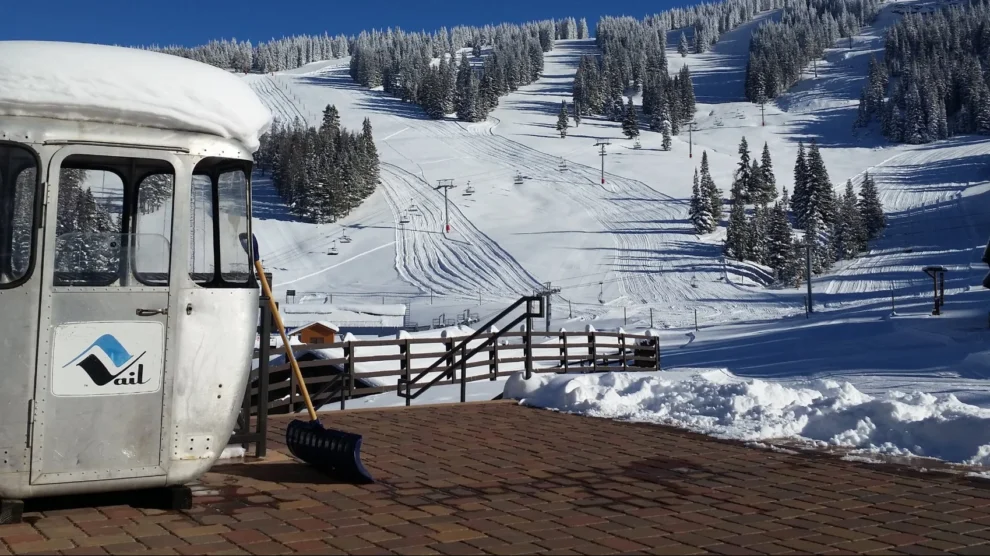


In 1998, while working at Whistler Blackcomb in British Columbia, Dominique Bastien overheard guests complaining that they couldn’t take pictures through the scratched windows of the resort’s gondolas. At the time, replacing damaged windows was often the only option available to ski resorts, and Bastien wondered whether there was a better solution.
That observation became the starting point for a business she would spend nearly three decades building. What began as a small window restoration operation eventually developed into The Gondola Shop, a specialized company handling complete gondola restorations, custom fabrication, and projects for customers in multiple countries.
Bastien’s entrepreneurial journey is unusual in several respects. She entered a market with few established competitors or technical procedures, developed restoration methods through experimentation, and gradually expanded into services that extended well beyond her original business concept. Along the way, she navigated the challenges of operating in a predominantly male industry, establishing relationships with international manufacturers, and convincing major ski resorts to invest in restoration rather than replacement.
Creating a Market From Scratch
Bastien initially launched Sunshine Polishing with a business partner, concentrating on restoring acrylic and polycarbonate gondola windows. Although polishing plastic surfaces was nothing new, restoring large, curved transportation windows presented challenges that existing techniques did not adequately address.
The work required developing procedures that accounted for surface distortion, heat, pressure, and the durability of the finished product. Bastien and her team experimented with equipment, materials, and techniques until they established methods that could deliver consistent results across entire fleets.
“When you start a business in an industry that barely exists, there is no manual telling you what to do,” Bastien explains. “You have to figure out the technical side, the equipment, the pricing, and then convince customers that what you are offering actually works and is worth the investment.”
Winning customers was particularly challenging because gondolas are passenger transportation systems. Resort operators needed confidence in the quality and reliability of the work before allowing an outside company to restore their equipment.
Bastien also faced the additional challenge of establishing credibility as a woman in a field dominated by men. She recalls having to work harder to demonstrate her technical knowledge and convince prospective customers that her company could handle demanding restoration projects.
In 2006, she became the sole owner of the business, gaining greater freedom to determine its direction and pursue opportunities as they emerged.
As the company grew, Bastien noticed a recurring problem. Customers who hired her to restore scratched windows frequently had gondola cabins with faded paint, deteriorating seats, and damaged hardware. Restoring the windows improved visibility, but the cabins still looked decades old.
Rather than limiting the company to its original specialty, she expanded into painting, upholstery, hardware replacement, fabrication, and eventually complete cabin restoration.
In 2019, Bastien established The Gondola Shop to bring those services together under one business.
One of her most consequential decisions was developing the ability to perform much of the work in-house. Managing multiple contractors for a single restoration could complicate scheduling, quality control, and accountability. By expanding the company’s internal capabilities, she gained greater control over production and customer expectations.
That approach became particularly important as The Gondola Shop began handling larger, multiyear restoration programs. At Breckenridge in Colorado, for example, the company works on a fleet of 111 gondola cabins, with restoration scheduled in smaller groups so the resort can maintain operations.
For Bastien, managing such projects requires considerably more than technical expertise. Transportation, staffing, materials, production schedules, and customer budgets all need to be coordinated, sometimes over several years.
Growing Beyond the Ski Industry
International business opportunities developed largely through relationships rather than a formal expansion strategy.
The ski industry is relatively interconnected, with resort operators, equipment manufacturers, and technical specialists frequently working across countries. As Bastien’s reputation developed, those connections helped introduce her company to new customers and projects.
Working internationally also required adapting to different environmental conditions and business cultures. Gondolas operating in Switzerland face intense ultraviolet exposure, snow, and extreme cold, while equipment in Vietnam encounters heat, humidity, and other environmental challenges.
The business practices were equally varied. Bastien learned that establishing trust with customers in Japan or Europe could require different approaches from those she used in North America.
Her relationships with equipment manufacturers have become another important part of the company’s development. One example is CWA, a Swiss gondola cabin manufacturer within the Doppelmayr Group. After several years of working together, Bastien and the manufacturer have discussed a potential formal partnership to support CWA gondola cabins in North America.
For Bastien, those discussions represent a significant professional milestone.
“When I started almost 30 years ago, I was a small independent business restoring scratched windows,” she recalls. “Today, I am sitting at the table with one of the world’s leading manufacturers discussing how we could work together.”
Bastien has also found opportunities outside the traditional ski resort market by repurposing retired gondola cabins for commercial uses.
At Columbia Sportswear’s headquarters in Portland, Oregon, 10 gondola cabins restored by her company have been installed throughout the office, providing employees with spaces for private conversations, phone calls, and individual work.
Other projects have included converting retired gondolas into food-service cabins, including three used by a customer selling cookies at ski resorts.
These projects introduced the company to customers in hospitality, corporate offices, restaurants, and other industries. They also created a new avenue for growth beyond the seasonal demands of the ski business.
Repurposing gondolas requires considerably more than cosmetic restoration. Each project can involve electrical systems, ventilation, insulation, seating, accessibility considerations, and custom fabrication. Bastien was able to expand into these applications because her company had already developed the technical capabilities necessary to dismantle, restore, and modify existing cabins.
The Business Lessons Behind Nearly Three Decades of Growth
Bastien’s experience offers an example of how a business can develop around a highly specialized service that larger companies have overlooked.
Her early competitors were not necessarily other restoration businesses. In many cases, she was competing against the established practice of replacing damaged equipment. Building a viable alternative required demonstrating that restoration could deliver practical and financial value to resort operators.
As her company expanded, the challenges changed. Bastien had to move beyond handling nearly every aspect of the operation herself and develop a team capable of managing increasingly complex work.
“Today, some of the best improvements come from employees who look at a problem differently than I do,” she says.
The company’s future opportunities reflect the same willingness to adapt that shaped its early growth. Bastien sees continued demand for restoration, fabrication, inspections, and replacement components as ski resorts evaluate the cost of maintaining aging equipment. She is also pursuing opportunities to strengthen relationships with original manufacturers and expand the market for custom gondola applications.
Her entrepreneurial philosophy remains grounded in the practical problem-solving that launched the business. Rather than following a predetermined expansion plan, she allowed customer needs to reveal opportunities for new services, then invested in the capabilities required to deliver them.
“I started with scratched windows and a pretty simple idea in 1998,” Bastien says. “I never imagined it would become what it is today.”
Nearly three decades later, Dominique Bastien has built an international business in a field that offered little established guidance when she entered it. Her experience demonstrates how technical expertise, persistence, and the ability to recognize overlooked commercial opportunities can support the growth of a highly specialized company.